I'm going to share something that took me years to figure out through trial and error, and then attempt to connect it to one of the most influential frameworks in storytelling. By the end, I hope you'll see meetings and presentations differently, and maybe recognize a pattern that's been hiding in plain sight.
My Saturday morning problem
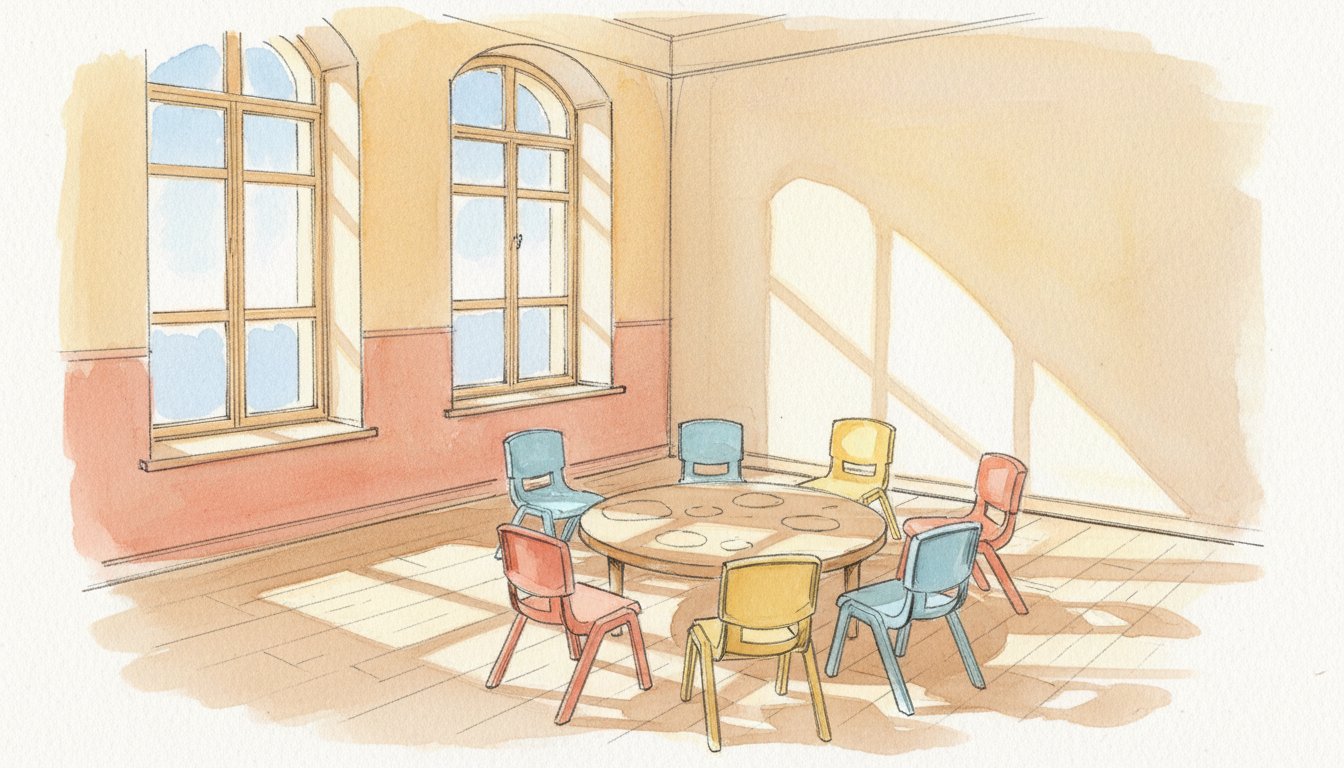
Saturday mornings at 8 AM. Anything in between five to twelve children aged 5 to 12, fresh from their beds, sitting in uncomfortable plastic chairs, knowing their friends are outside playing while they're stuck learning irregular English verbs. If you think managing a room full of senior engineers during a technical review is challenging, try explaining the difference between "I have been" and "I have gone" to kids who'd rather be anywhere else.
Those Saturday morning lessons were brutal at first. I'd dive straight into grammar rules and watch eyes glaze over within minutes. Kids staring out of windows, pencils tapping, that universal look of "when will this end?". It took months of failures before I stumbled onto something that actually worked.
What I realized, completely by trial and error, was a structure that not only kept children engaged but actually helped them learn. Years later, when I read Joseph Campbell's "The Hero with a Thousand Faces," I realized I'd been unconsciously applying the same pattern he found in myths across basically every culture: the hero's journey.
But here's the thing: this structure doesn't just work for mythology or Saturday morning English classes. It works for every meeting, every presentation, every moment when you need to guide people from where they are to somewhere new.
The accidental discovery
When I first started teaching, I made the classic mistake of assuming information transfer equals learning. "Today we're learning the present perfect tense," I'd announce, then launch into rules and examples. Five minutes in, I'd lost half the class.
The breakthrough came from sharing my frustrations with fellow teachers. Everyone could relate to losing kids' attention, and everyone had different styles and strategies they'd learned and favored. Through iterating on my own experience and learning from colleagues, then watching how different approaches played out in the classroom, I gradually developed a structure that actually worked.
From there, I developed what became my standard structure, though I didn't understand why it worked so well at the time. I'd start every class by telling them exactly what we were going to accomplish together, recap what we'd learned the previous week, outline the challenges we'd face, and yes, tell them when break time was (because honestly, that's what they really wanted to know). Then we'd work through increasingly complex examples, and I'd end by helping them connect what they'd learned to real conversations they might have.
The repetition felt almost redundant to me (preview, teach, recap, preview again) but the kids loved it. They knew where they were in the journey at every moment. More importantly, they trusted me to guide them somewhere.
Campbell's pattern
Joseph Campbell spent decades studying myths from around the world and discovered something remarkable: whether it's Luke Skywalker destroying the Death Star, Mario rescuing Princess Peach from Bowser's castle, or Frodo destroying the One Ring, virtually every compelling story follows the same three-part structure.
- Departure: The hero leaves their familiar world, often reluctantly, to face some challenge or quest.
- Initiation: They encounter trials, gain new skills or wisdom, and are fundamentally transformed by the experience.
- Return: They come back to share their newfound knowledge or power with their community.
Campbell called this pattern the "monomyth" because he found it everywhere (not just in ancient legends, but in modern movies, novels, even the stories we tell about our own lives). The reason it appears across all cultures and time periods, he argued, is that it mirrors something fundamental about how humans actually grow and change. Once I started noticing it, I haven't been able to unsee it, and it sometimes makes it annoyingly simple to spoil a story for yourself.
It happens in many aspects of life as well, I doesn't have to be a literal grand journey to leave your starving and oppressed town, struggle through the lands, make a friend, or enemy, or two. Maybe fail a few times. And then finally kill the dragon, get the gold, and return home to share the treasure. Think about starting a new job, learning to drive, or becoming a parent. You leave what's comfortable, face challenges that transform you, then return to your life with new capabilities. The pattern is hardwired into how we make sense of meaningful change.
From classroom to conference room
It wasn't until years later, working as a software engineer, that I realized this same structure transforms adult meetings and presentations. Campbell showed that compelling stories follow a three-act pattern: departure from the familiar, initiation through challenges, and return with new wisdom. My accidental teaching structure followed exactly the same arc.
Now I start every important meeting the same way I started those English classes. Not with agenda items, but by establishing where we are and where we're going together. "We're here because our deployment pipeline is taking three hours, and by the end of this session, we'll have a plan to cut that in half. Here's the journey we'll take together, and here's why solving this matters to each of you."
This isn't just agenda-setting. I'm establishing what Campbell called the "ordinary world" (what the current landscape is) and issuing a "call to adventure" (what the problem is). The middle of the meeting becomes a series of escalating challenges: understanding the problem, exploring constraints, working through solutions, with me as the guide rather than the hero. All of us as participants are the ones who need to transform (our thinking, our approach, our decisions).
The ending is crucial and where most meetings fail. They just... stop. Instead, I always close by helping people integrate what we've accomplished. What did we solve today? What are the specific next actions? How does this connect to our broader objectives? What's our next challenge together? Just like those Saturday morning recaps, but for adults trying to return to their daily chaos without losing what they've learned.
Why this actually works
Why does this work so well? Because it mirrors the fundamental pattern of human growth and change. Whether you're eight years old trying to master English grammar or forty years old trying to navigate a technical decision, your brain needs the same things: context for why this journey matters, clear progression through challenges, and help integrating new understanding with what you already know.
The children taught me that minds need hooks to hang new information on. Adults are no different. By providing structure that mirrors how we naturally process change and growth, you're not just organizing information; you're organizing the human experience of learning.
But there's a critical difference between children and adults. Kids were happy to leave with their new knowledge and show it off to parents. Adults have to return to their teams, their existing systems, their inbox-driven priorities, and somehow apply what they've learned without it getting lost in the chaos.
This is why I now end important meetings with what I call integration planning (helping people plan how they'll actually use what they learned). Who needs to know about this and how do we share with them? What are specific actions to take? Who will take them? What obstacles need clearing? When do we follow up? It sounds simple, but it's the difference between a meeting that feels productive in the moment and one that actually has a chance of creating change.
I've started noticing this pattern everywhere once I knew to look for it. The most engaging technical presentations follow the same arc. The best product demos. Even effective one-on-ones with team members. They all take people on a journey from familiar to new (current state to desired future state), through challenges, and back to their world with something valuable.
Want to try this? Start small. In your next team meeting, spend the first few minutes establishing the current state and desired future state, not just the agenda items. Structure your content as building challenges (progressively harder problems that build on each other) rather than information dumps. End by explicitly helping people plan how they'll bring any insights back to their daily work.
What I learned from those Saturday morning classes, and what Campbell discovered in studying myths across cultures, is that humans are fundamentally storytelling creatures. We don't just process information; we experience narratives. We don't just solve problems; we go on journeys of discovery.
Whether you're explaining present perfect tense to impatient ten-year-olds or walking an engineering team through a strategic pivot, you're asking people to transform. And transformation, it turns out, follows a predictable pattern that's been working for thousands of years.
The children in my Saturday classes weren't just learning grammar. They were developing confidence and discovering they could master complex concepts. The people in your conference room aren't just making decisions. They're navigating uncertainty and hopefully emerging with newfound perspective at the other end.
Both need a guide who understands the journey and can help them complete it successfully. Sometimes they just need someone to help them see the adventure that's possible and guide them safely through to the other side.
Even if it is 8 AM on a Saturday morning.